
When we first talked about hosting a Deep Dive track on Generative AI at Agile Testing Days, Tariq King and I had one simple hope: that we could create a space where people could
be curious without feeling behind, skeptical without feeling like they were “missing the
future,” and practical without being told to “just experiment.”
That’s a tricky balance. GenAI can be genuinely useful, genuinely confusing, and genuinely
over-sold—sometimes all in the same week. So we designed the GenAI Deep Dive to be a
place where we could slow down, look closely, and learn from each other. Not in the abstract.
In the day-to-day reality of testing, quality, teams, and systems.
What made the track special wasn’t any single talk or technique. It was the combination of
people: the contributors who shared their work and their doubts, and the audience who
brought real problems, real constraints, and the kind of thoughtful questions that make a room
smarter.
This article is a thank you to everyone who made it what it was. It’s also an invitation to
anyone considering the next edition of Agile Testing Days.
Setting the tone: clear, honest, and grounded
We opened the track by getting the basics in place. Tariq set the foundation: what GenAI is
good at, what it’s bad at, and why so many conversations go off the rails when we skip the
basics. That early clarity helped the rest of the track. It gave people permission to say, “I
don’t know,” and to ask questions that might feel too simple elsewhere.
But the track wasn’t meant to stay at the level of concepts. The goal was to connect the
technology to humans — the people building software and the people using it.
And that’s where one of the most memorable moments of the track came in.
From hype to human context: accessibility as a first-class
topic
In the session “From Hype to Human Context,” Tariq again helped ground the room. Then
Dennie Declercq took us somewhere that many GenAI conversations still don’t go often
enough: disability and accessibility. Specifically, how GenAI can support people with
disabilities, with a focus on learners on the autism spectrum.
Dennie’s perspective wasn’t theoretical. He spoke from lived professional practice as
someone who specialises in teaching and supporting individuals on the autism spectrum. The
shift in the room was tangible. Suddenly, “use cases” weren’t lists on a slide; they were real
people navigating the world, learning, communicating, and working. The discussion moved
from “Can it do this?” to “How do we make it help... safely, respectfully, and reliably?”
It was also a useful reminder for anyone building tools, tests, or processes: accessibility isn’t a niche concern. It’s a quality concern. And GenAI is not automatically inclusive or helpful.
If we want it to reduce friction rather than add to it, we have to design and test with care.
Hands-on work: prompts, practice, and the messy middle
Anaïs van Asselt and Paula Bassagañas joined me for “Prompt Forward,” a hands-on session
built for testers. We tried to keep it real: prompts that help you think, not prompts that
magically solve everything.
One thread I wanted to make concrete was the difference between using a hosted chat
interface and working at the API level. It’s the moment you move from asking questions to
designing something repeatable. That bridge matters because it changes what you can
automate, what you can control, and what you can measure.
That’s when Anaïs demonstrated using GenAI to generate automated tests based on protocol
traffic. And her demo did what demos do: it hit a problem. She sailed past it by fixing things
on the fly like a pro, and honestly, it made the session better. Real systems fail at
inconvenient times. Watching someone calmly debug in front of a room is far more valuable
than watching a perfect script play out.
Paula took us through her journey implementing large-scale Retrieval Augmented Generation
(RAG) in her organisation using Dify. It’s a topic that can get heavy fast, but her Harry
Potter–themed, witty slides helped keep it accessible while still respecting the complexity
underneath.
What I appreciated most in that session was how quickly the audience turned it into a shared
lab. People compared what worked, what didn’t, and what changed depending on context.
There was no secret sauce. The value was in learning how to think with these tools without
outsourcing your thinking to them.
Agents and automation: new possibilities, old
responsibilities
On the second day of the GenAI track, we moved toward agentic systems. The idea was to
look at AI that can take actions, not just respond. Tariq and Julian Massing led “Rise of the
Agents,” exploring how this changes the conversation around automation and how we might
structure work when an AI assistant can also execute steps across tools.
This is where testers in the room really leaned in, because it touches a familiar nerve: you can
automate more, but automation doesn’t remove responsibility. It shifts it. When the system is
doing more on your behalf, questions of observability, traceability, and trust become even
more important.
From there, Julio de Lima, and Manoj Kumar Kumar took us into “Test Machina,” a two-part deep dive on testing agents. The sessions had the satisfying feel of opening the hood: what is
an agent really doing, where does it get its information, how do you evaluate it, and what
does “good” look like when behaviour can change based on prompts, context, or tools?
The discussions were honest and practical. People asked about failure modes, how to
constrain scope, and what to do when the agent is “mostly right” but occasionally confident
and wrong. These aren’t hypothetical concerns; they’re the kinds of issues that show up the
moment you put a system into real work.
A playground and an open space: learning together, not
just listening
On the final day, we shifted from sessions to shared building. The GenAI Playground was
designed as a place to create, try things, break things, and learn out loud. The room was
arranged into a live workshop where each speaker in the track their own table where
participants could sit along and experiment with their own ideas.
Then we closed with something that always feels right at Agile Testing Days: an Open Space.
“Bring Your Questions and Ask the Experts” is a simple format, but it’s powerful because it
trusts the audience. It says: we don’t need to guess what matters... you can tell us.
And people did.
We heard questions about introducing GenAI responsibly in organisations, about skills and
hiring, about ethics and governance, about how to test systems that generate outputs, and
about how to keep humans involved in a meaningful way. We heard stories from teams under
pressure to use AI without a clear reason and stories from teams finding small, sensible ways
to reduce repetitive work.
The most important outcome wasn’t agreement. It was shared clarity: what we know, what
we don’t, and what we should test before we trust.
What I’ll remember most
I’ll remember the generosity: speakers sharing imperfect experiments, participants sharing
hard-earned lessons, and people helping each other without showing off.
I’ll remember the way accessibility landed in the middle of a GenAI track and felt completely
natural, because it is natural if you care about quality.
And I’ll remember how often the best moments came from the audience: a sharp question, a
careful challenge, a story that changed the direction of a discussion.
I also loved the fact that none of the speakers took the word “expert” too seriously. We all behaved as students of the craft.
If you’re thinking about the next edition
If you’ve been hesitant about GenAI because it feels noisy, you’re not alone. If you’ve been
curious but unsure where to start, you’re exactly the kind of person these conversations need.
And if you’ve been experimenting quietly and wondering whether your small wins count:
they do, especially when you share them.
That’s what the Deep Dive track is for. Not to overwhelm, not to hype, not to pretend
everything is solved. It’s there to learn together, in public, with enough time to actually
understand what we’re doing.
If you join us at the next Agile Testing Days, come ready to participate. Bring a problem you
care about. Bring a workflow you want to improve. Bring your skepticism and your curiosity.
And if you’re working on accessibility, trust, safety, or real-world constraints, please bring
that too. Those perspectives don’t “add diversity” to the conversation. They make it accurate.
On behalf of Tariq and me: thank you to everyone who contributed, challenged, asked, built,
and stayed in the room. We’re already looking forward to doing it again and to seeing who
joins the conversation next time.
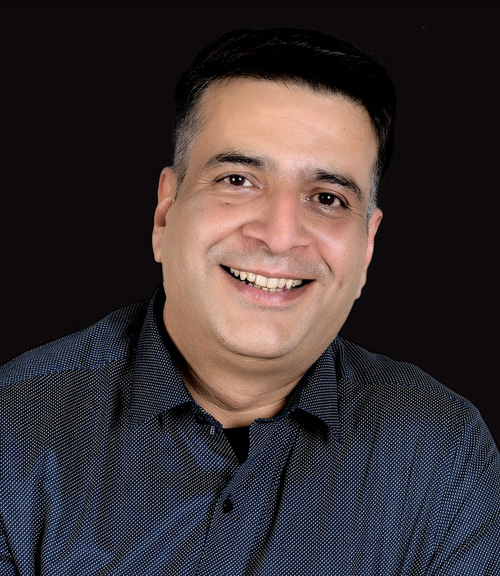
Author Rahul Verma
Rahul is an awarded thought leader for his contributions to the testing community. He is a Senior Coach and Consultant with trendig technology ser…


